The survey results were covered by several mainstream media, including CNN and the Wall Street Journal. They were summarized by Catherine Rampell of the Washington Post under the title “A chilling study shows how hostile college students are toward free speech.”
In his article, Dr. Villasenor reported five results of the survey. Respondents were asked “Does the First Amendment protect ‘hate speech?’” A plurality of 44% answered “no,” compared to 39% who said “yes,” and 16% who didn’t know. They were wrong, since the First Amendment protects offensive speech unless it is a threat or is directed toward producing imminent lawless action. Women were more likely than men to hold this incorrect belief.

Respondents were given the following hypothetical scenario.

A majority of students agreed, with Democrats being more likely than Republicans to condone shouting down a speaker.
They were also asked about the use of violence to silence a speaker.
 The approval rate was much lower, but the fact that 19% approved of violence is certainly disconcerting. Men were more likely than women to condone violence.
Given the same scenario, respondents were asked whether “under the First Amendment, the on-campus organization sponsoring the event is legally required to ensure that the event includes not only the offensive speaker but also a speaker who presents an opposing view.” A majority (62%) incorrectly agreed that there was a legal requirement of balance.
Finally, respondents were given an item from a 2016 Gallup poll in which they were asked to choose between two types of university learning environments:
- Option 1: Create a positive learning environment for all students by prohibiting certain speech or expression of viewpoints that are offensive or biased against certain groups of people.
- Option 2: Create an open learning environment where students are exposed to all types of speech and viewpoints, even if it means allowing speech that is offensive or biased against certain groups of people.
A 53% majority chose the first option of prohibiting offensive speech, while 47% opted for the more open environment.
Shortly after the article was published, doubts about the validity of the survey were raised, with one critic labeling it “junk science.” It turns out that Dr. Villasenor is a professor of electrical engineering with no prior experience conducting surveys. His research was sponsored by the conservative Charles Koch Foundation. Of course, neither of these facts necessarily invalidates the survey.
A more important problem is that it is not clear how Dr. Villasenor obtained his sample. He does not claim that the survey was administered to a random sample of college students, but merely that the sample was “geographically diverse” and “approximately mirrors” the undergraduate population. This has led critics to conclude that he used a convenience sample of students who were available, but not necessarily representative of college students. Dr. Villasenor has acknowledged that this was an “opt-in” survey, a term used to refer to a survey using volunteers whose biases are unknown.
Dr. Villasenor further irritated survey experts by stating the confidence intervals, or the margin or error, around his results. This is inappropriate unless a random sample is used. (It should be noted that Dr. Villasenor covered his butt by saying that these confidence intervals were valid “to the extent” that his respondents were representative of college students, without actually claiming that they were representative.)
Dr. Villasenor also neglected to mention that his survey was conducted just a few days after the white supremacist rally in Charlottesville, VA, in which a peaceful demonstrator was killed. This violent incident may have temporarily reduced students’ tolerance for offensive speech.
Finally, it should be noted that in 2016, when Gallup asked a nationally representative sample of college students, carefully chosen using probability sampling, to choose between the two learning environments described above, 78% chose Option 2, the more open environment. While it is possible that student attitudes have changed dramatically in the past year, it is also possible that differences in sampling were responsible for the discrepancy.
Catherine Rampell defended Dr. Villasenor’s survey, correctly noting that no survey uses perfect random sampling in that sense that respondents are randomly chosen from a complete and accurate single list of all the college students in the country. However, her defense blurs the distinction between carefully conducted probability sampling and the apparently more haphazard methods used by Dr. Villasenor.
Sophia McClennen of Penn State has labeled Villasenor’s survey an example of “blue-baiting,” in which conservative organizations attempt to manufacture doubt about free speech protections on campus in order to undermine public confidence in higher education. (This may be working.)
At the very least, the controversy suggests that journalists should be careful to determine that professional sampling techniques are used before reporting survey results. On the other hand, some college students did give these responses, even if they came from a biased sample. This suggests that high schools and universities should devote more attention to educating students on the meaning and scope of the First Amendment.
You may also be interested in reading:

 Not surprisingly, the gap between rich and poor is increasing. The top 1% owned “only” 29.9% of the nation’s wealth in 1989.
 This provides an interesting backdrop for


 Not surprisingly, AVR also reduced the average age of Oregon voters. 37% of the new AVR voters were between the ages of 18 and 29, compared to only 13% of non-AVR voters.
 Finally, AVR increased the percentage of low income people who voted in 2016. As shown in the chart, the new AVR voters were more likely than existing voters to come from lower income neighborhoods, and less likely to come from affluent neighborhoods.
 The Oregon AVR law is unusual when compared to the much greater number of laws that make it more difficult to vote. However, this raises an interesting issue. An opponent of AVR could argue that the Oregon law is nothing more than an attempt by Democrats to increase their chances in subsequent elections, and that laws that try to increase voter turnout are just as partisan as laws that try to suppress it. Since there is no constitutional right to vote and no uniform set of federal laws defining voting procedures, any change in a state law that affects voter turnout can be criticized as unfair by one party or the other.
 Unfortunately, these two alternatives are not true opposites. Voter registration is not the only procedure that makes it more difficult for people to vote. In addition, the question doesn’t impose any limits on doing “everything possible” to make it easier to vote. (Should they send a limo to my door on election day?) It is easy to imagine that, had respondents been given some rationale for restricting access to the ballot box, such as preventing “voter fraud,” the results might have been different. Nevertheless, we can take some comfort in the fact that, in the abstract, the public views making it easier for people to vote more favorably than making it more difficult.

 However, there is no evidence of any reduction in racial bias. Blacks and Hispanics account for 51% of the population of New York City, with Whites accounting for most of the remaining 49%. Yet
  Black and Hispanic defendants are also
  The persistence of racial discrimination in marijuana arrests seems to be due to a combination of institutional and individual racism.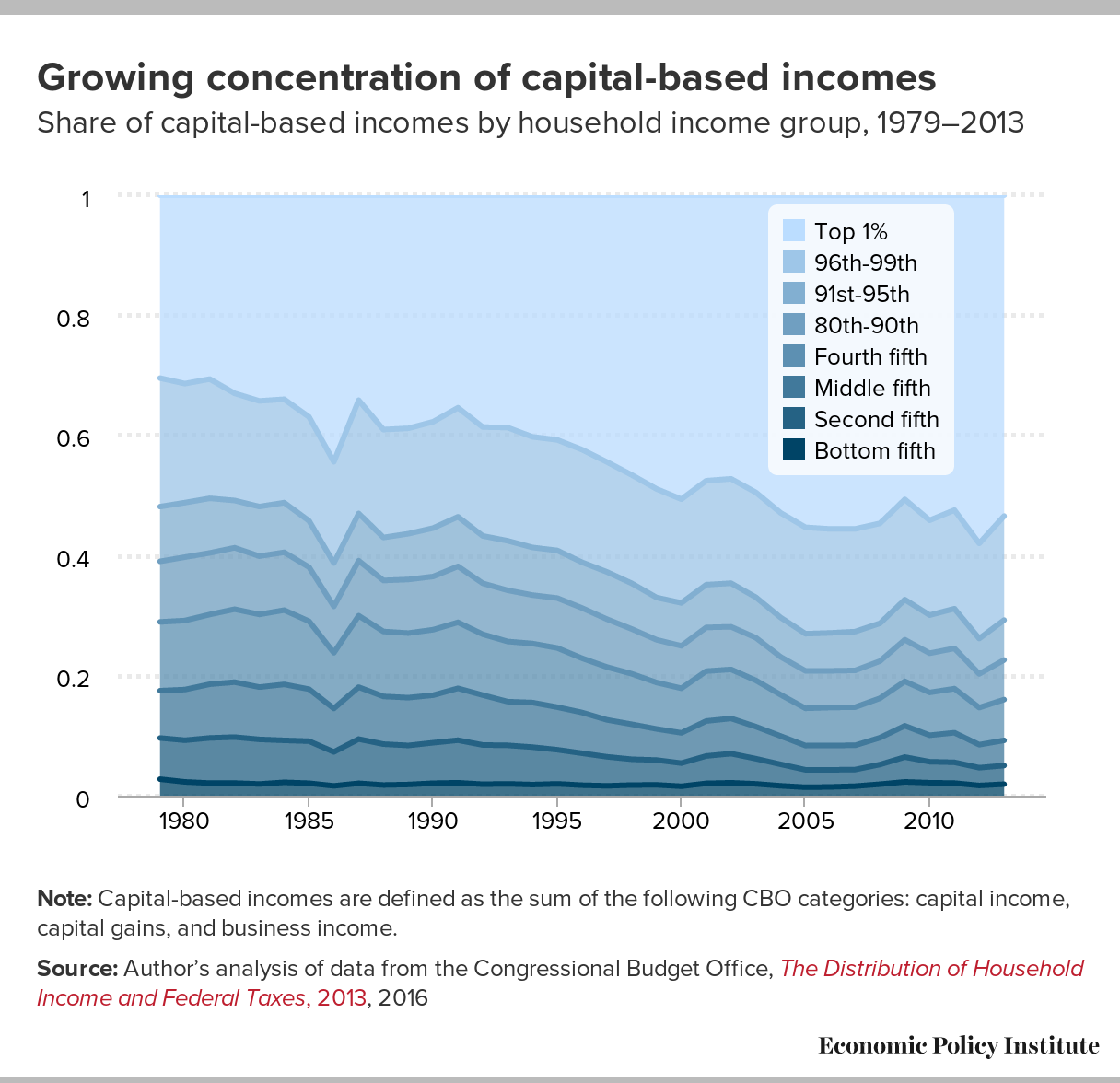
You must be logged in to post a comment.